In an era of rapid technological convergence, maritime professionals must look beyond traditional boundaries to remain competitive. From aerospace to civil infrastructure, cross-industry innovations such as non-destructive testing (NDT), robotics, and sensor fusion are transforming how we inspect, diagnose, and analyze vessels. Indeed, just as aerospace engineers deploy phased-array ultrasonics and eddy current techniques for structural integrity, marine surveyors today can leverage those same advances to deliver deeper insight, faster turnaround, and more defensible conclusions. (See Forbes’ discussion on cross-industry innovation in engineering)
At A&L Maritime Experts, LLC, we believe the future of marine surveying lies in blending best practices from sectors like aerospace, civil inspection, and robotics. By adapting advanced technologies for commercial boats and yachts — typically ranging from 20′ to 250′— we elevate the benchmarks of accuracy, repeatability, and expert testimony.
The Smart Car → The Smart Survey: Learning from Other Sectors
In automotive and aerospace sectors, “smart” systems integrate sensors, data analytics, and real-time diagnostics. For example, modern cars monitor fatigue in critical structural components via embedded sensors and predictive maintenance. In aerospace, NDT is a routine tool to detect fatigue cracks or delamination in composite wings.
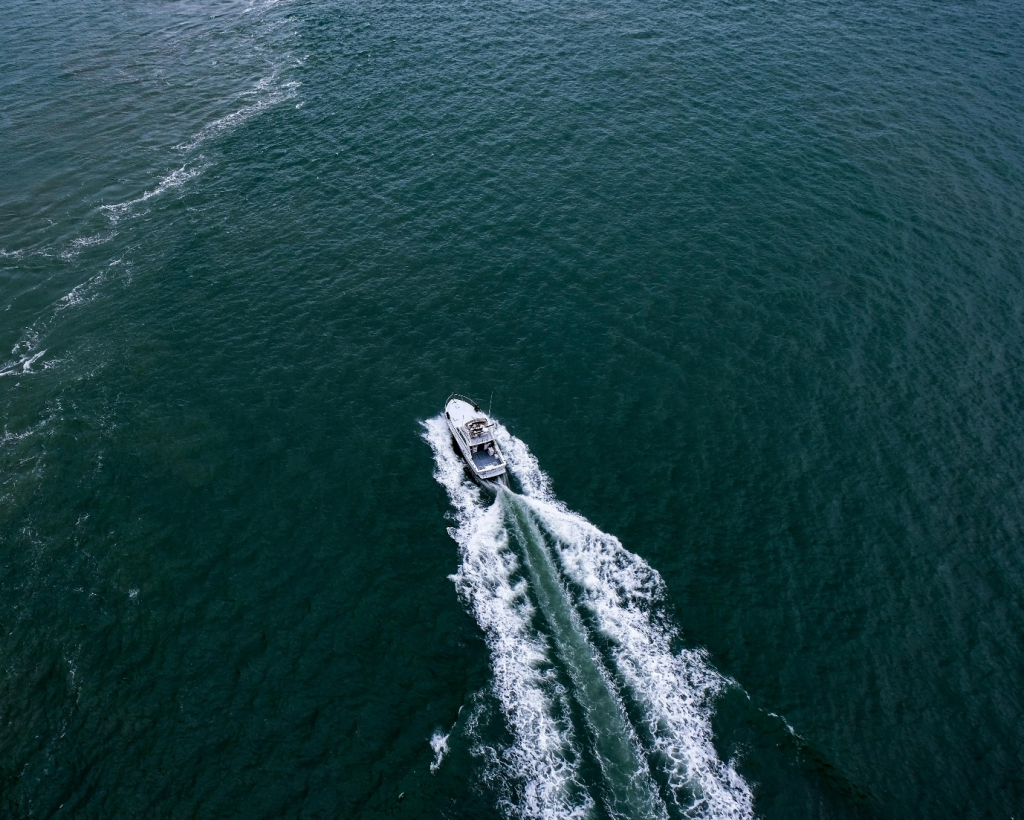
Those same techniques are now being applied to marine surveys. Instead of relying solely on visual inspection and traditional sounding, we apply sensor suites, robotics, and analytics to boats and yachts. This cross-industry import enables us to offer a marine “smart survey” — with richer data, earlier warnings of hidden defects, and greater confidence in conclusions.
Non-Destructive Testing (NDT) Techniques in Marine Surveys
One of the clearest examples of cross-industry adoption is NDT. Originally refined in aerospace and industrial applications, methods such as phased array ultrasound, eddy current testing, acoustic emission monitoring, and resonance techniques are now being applied to marine environments.
- Phased array and TOFD (Time-of-Flight Diffraction): These ultrasonic methods, which are standard in aerospace inspection, enable scanning beneath coatings and through complex geometries.
- Eddy current and electromagnetic inspection: These methods are particularly useful on conductive hulls and structural frames, as they detect near-surface flaws such as corrosion or cracks.
- Acoustic emission sensing: Continuously monitors crack formation in stressed structures underwater—this approach is commonly used in civil and offshore asset inspections.
- Acoustic resonance technology (ART): A technique developed for pipelines and infrastructure that infers wall thickness from resonance behavior, which can be adapted for metal hulls.
By integrating these methods into our boat and yacht surveys, we reduce reliance on destructive sampling, improve defect detectability, and provide multi-modal corroboration of findings.
Robotics, Remote Platforms & Sensor Fusion
Beyond NDT, innovations from the subsea, infrastructure, and aerospace sectors are enabling the development of remote inspection platforms. Unmanned surface vehicles (USVs), remote robotics, and sensor fusion are making traditional dive inspections more cost-effective and reliable.
- Unmanned surface vehicles (USVs) and survey drones: These are common in hydrographic and environmental mapping. The RSV (Remote Survey Vehicle) can host sonar, lidar, and video payloads for mapping and condition monitoring.
- Robotic NDT crawlers: Adopted from pipeline and industrial inspection, these crawlers traverse structures to collect ultrasonic and electromagnetic data remotely.
- Sensor fusion & structural health monitoring (SHM): Borrowed from civil engineering, combining data from optical, acoustic, strain, and thermal sensors allows inference of degradation over time.
In practice, when surveying a commercial boat or yacht (typically 20′–200′), we might deploy a USV or remotely controlled scanner to sweep hull surfaces, feed data into a SHM platform, and overlay NDT scans. That provides a composite picture of flaws, loading stress, and material health.
From Data to Defensible Findings
Technologies themselves are powerful, but only when the data is skillfully interpreted and integrated. At A&L Maritime Experts, we combine sensor data, historical vessel records, load modelling, and forensic techniques to reconstruct incidents or assess vessel fitness. Our litigation-grade surveys rely on:
- Cross-validated defect detection (for instance, confirming a crack by both eddy current and ultrasonic measurements)
- Trend analysis and fatigue modelling, using SHM methodologies from aerospace/civil sectors
- Robust documentation and chain of custody, to satisfy the demands of cross-examination in federal, state, and arbitration forums
Over 50 years and more than 16,000 vessel inspections, we have honed our ability to translate advanced measurements into legally defensible conclusions.
Contact Us for Expert Maritime Support
At A&L Maritime Experts, LLC, we specialize in boat collision investigation and yacht crash analysis in Florida. With over 16,000 vessel inspections and decades of maritime engineering behind us, we serve as your maritime legal support resource. Review our FAQs or call now to discuss your case.