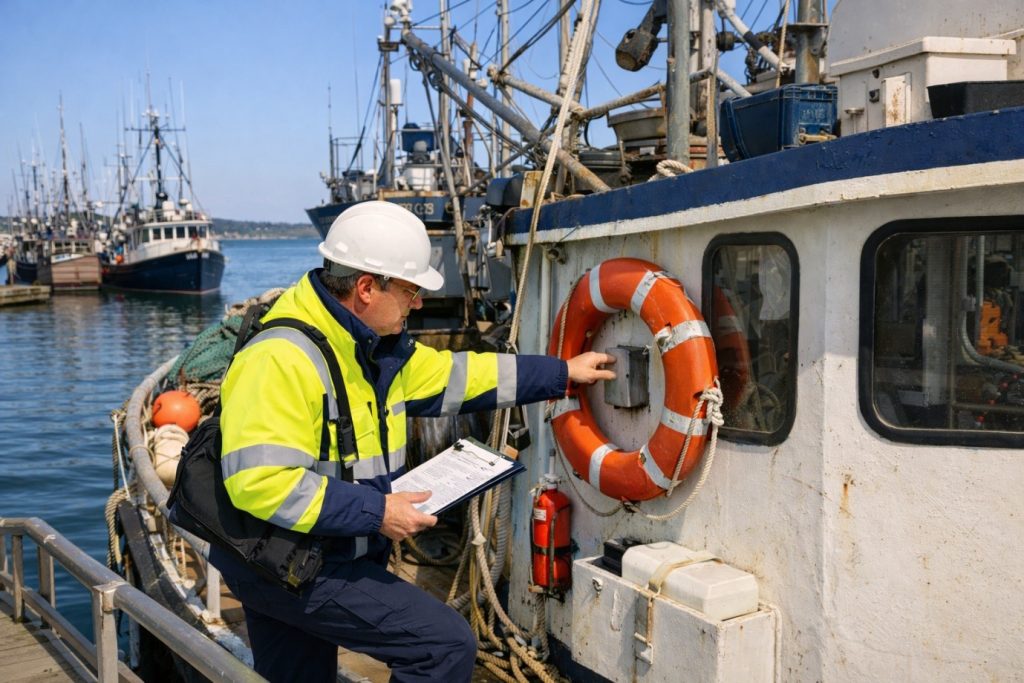
A boat inspection before buying should help you answer one practical question: does this vessel deserve further evaluation, or are there enough warning signs to slow down the purchase?
A buyer can identify many visible concerns before making an offer, including hull repairs, soft deck areas, poor wiring, engine problems, bilge water, steering issues, missing records, and abnormal behavior during a sea trial. The goal is not to diagnose every defect yourself. It is to recognize findings that deserve a professional marine survey, specialist testing, negotiation, or reconsideration.
If you need a broader system-by-system inspection list first, use A&L’s Boat Inspection Checklist before working through the red flags below.
What Should You Check Before Buying a Used Boat?
Start by looking for consistency.
The vessel’s physical condition, maintenance history, seller’s statements, engine behavior, sea trial performance, and available records should tell a reasonably consistent story.
A clean exterior alone is not enough.
A boat may look well maintained while still having moisture intrusion, previous structural repairs, electrical problems, neglected machinery, or underwater damage that cannot be seen at the dock.
Discover Boating similarly recommends using a buyer inspection to identify obvious concerns before paying for a professional marine survey.
The most useful buyer inspection therefore focuses on red flags and inconsistencies, not cosmetic perfection.
Verify the Boat’s History Before the Physical Inspection
Before looking closely at the boat, verify the basic identity and documentation.
Check the Hull Identification Number, title, registration, ownership records, service history, repair invoices, engine hours, previous surveys, and any available warranty or manufacturer information.
The U.S. Coast Guard maintains recall and safety defect information for recreational boats and associated equipment, which can also help buyers identify documented safety issues.
Discover Boating recommends checking the HIN, ownership, title history, salvage information, and recalls before completing the physical inspection.
Do not stop at collecting paperwork.
Compare the records with the boat.
If the seller reports no significant repairs but the hull shows localized refinishing, mismatched gelcoat, or structural irregularities, investigate the discrepancy.
If the engine hours appear low but the machinery condition suggests heavy use or poor maintenance, ask why.
Documentation should support the vessel’s condition, not substitute for inspection.
Check the Hull for Previous Damage and Repairs
Inspect the hull in good light and look along the surface rather than only directly at it.
Watch for:
Localized color changes
Different gelcoat texture
Uneven fairing
Hull waviness
Blisters
Cracks
Stress cracking
Impact marks
Fresh coatings in isolated areas
Discover Boating specifically advises buyers to look for uneven hull surfaces, mismatched finishes, blistering, and evidence of previous repair.
A repaired area is not automatically a reason to reject the boat.
The important questions are:
What happened, how was it repaired, and is the repair consistent with the seller’s records?
Large undocumented repairs or signs of structural damage deserve professional evaluation before you make a final purchase decision.
Inspect the Deck and Transom for Moisture or Soft Areas
Walk the deck slowly and notice changes in stiffness or movement.
Softness around cleats, rails, hatches, engine mounts, or other penetrations may justify further investigation for water intrusion or core deterioration.
The transom deserves particular attention on many fiberglass boats because fittings, outboard mounting bolts, sterndrives, ladders, and other penetrations can allow moisture into the core if sealing fails. Discover Boating identifies transom water intrusion as a potentially expensive structural concern.
Do not treat a soft area as an automatic diagnosis.
It is a signal that the underlying structure needs evaluation.
The same principle applies to elevated moisture meter readings. A reading requires interpretation based on construction, coatings, nearby readings, and other evidence.
Examine the Engine and Maintenance History
The engine is one of the most expensive systems on many powerboats, so visual condition and service history deserve careful attention.
Look for oil leaks, coolant leaks, corrosion, damaged hoses, worn belts, fuel staining, unusual repairs, and signs of neglect.
Ask to see the engine start cold whenever practical.
A cold start may reveal starting difficulty, smoke, rough operation, or other behavior that can be less obvious after the engine has already warmed.
Jet Ski of Miami recommends checking corrosion, oil leaks, belts, hoses, and considering compression testing when evaluating a used boat.
A real buyer discussion on Reddit also shows why this matters. The buyer ultimately abandoned the purchase after the engine failed a compression test, while commenters repeatedly recommended a cold start, sea trial, maintenance records, and testing under load.
A marine survey and an engine specific mechanical evaluation are not always the same thing.
If the engine is expensive, older, high hour, or showing questionable symptoms, specialist diagnostics may be justified.

Check the Electrical System and Electronics
Do more than switch electronics on.
Inspect the quality of the visible installation.
Look for corrosion, loose terminals, exposed conductors, poorly supported wiring, non-marine repairs, heat damage, temporary connections, and unexplained modifications.
Test navigation electronics, VHF radio, lighting, bilge pumps, instrumentation, and other installed systems.
Jet Ski of Miami recommends testing electronics including GPS, radios, bilge pumps, and lighting, while the Reddit buyer discussion repeatedly identifies corroded or poorly repaired wiring as a warning sign.
ABYC maintains standards covering electrical systems, storage batteries, bilge pumps, fuel systems, steering, through hull fittings, and other boat systems.
A working device does not automatically mean the installation is sound.
Inspect the Bilge, Through Hulls, and Plumbing
Look inside the bilge before the sea trial and again afterward.
Some water may have a simple explanation, but unexplained standing water deserves a question:
Where is it coming from?
Inspect visible hoses, clamps, shaft seals, plumbing connections, pumps, seacocks, and through-hull fittings.
A water or residue line higher inside the hull may also justify questions about previous flooding or swamping.
Do not simply ask whether the bilge pump works.
Try to determine whether the boat is taking on water and whether the pumping system is masking a leak.
Examine Steering, Propeller, and Running Gear
Operate the steering at the dock and during the sea trial.
Watch for excessive play, unusual resistance, hydraulic leaks, delayed response, or abnormal noises.
Inspect the propeller for dents, bends, corrosion, and impact damage. If accessible, examine the propeller shaft, rudder, sterndrive, or lower unit as well.
Propeller damage can be more than cosmetic. It may justify additional evaluation for vibration, shaft alignment, drivetrain problems, or prior impact.
Why a Sea Trial Is Essential Before Buying
A boat can behave normally at the dock and very differently under load.
A useful sea trial should observe the vessel through cold start, warm up, shifting, acceleration, cruising operation, steering, maneuvering, trim, and return to the dock.
Watch for:
Engine temperature
Alarms
Unusual vibration
Smoke
Poor acceleration
Bogging
Steering problems
Abnormal noise
Leaks after operation
Boat Trader describes the sea trial as the stage where systems are evaluated under actual operating load, typically alongside a dock inspection and haul out.
The Reddit discussion reinforces the same buyer concern: commenters repeatedly recommended seeing the boat operate from a cold start through operating temperature and normal performance before completing the purchase.
A seller who refuses a reasonable sea trial without a clear explanation creates additional uncertainty that the buyer should resolve before proceeding.
Why a Boat Can Look Fine in the Water but Still Need a Haul Out
Some important areas cannot be evaluated properly while the boat remains afloat.
A haul out allows closer inspection of the underwater hull, keel, propeller, shaft, rudder, struts, through-hull fittings, bottom coatings, and visible grounding or impact damage.
Boat Trader describes a typical in-water pre-purchase survey as involving three stages: dock inspection, sea trial, and haul out.
This is especially important when the boat shows vibration, suspected grounding damage, questionable running gear, underwater repairs, or unexplained leakage.
Used Boat Red Flags That Need Professional Evaluation
The following findings should not automatically be treated as proof that a boat is bad. They should change what you investigate next.
| Red Flag | What It May Justify Checking |
|---|---|
| Soft deck or transom | Moisture intrusion or core deterioration |
| Mismatched gelcoat | Previous repair or damage |
| Hull waviness | Structural repair or fairing work |
| Fuel odor | Fuel system leak or ventilation concern |
| Milky engine oil | Possible water contamination |
| Corroded wiring | Moisture exposure or poor electrical maintenance |
| Persistent bilge water | Leakage or plumbing problem |
| Damaged propeller | Impact, vibration, shaft, or drivetrain concern |
| Poor compression | Internal engine condition |
| Steering resistance | Steering system condition |
| Missing maintenance history | Greater uncertainty about prior care |
| Seller refuses sea trial | Increased purchase risk and unanswered questions |
The severity, cause, and repair implications matter more than the presence of one symptom.
What a Buyer Inspection Cannot Tell You
A visual boat inspection before buying has limits.
It may not establish the full extent of hidden core moisture, concealed structural damage, internal engine wear, hidden corrosion, electrical heating, shaft alignment, or previous structural repairs.
Professional equipment and experience may be required to understand those conditions.
A&L discusses these limitations in greater detail in Beyond the Checklist: A Survey as Dialogue, Not Autopsy, which explains why maintenance history, modifications, intended use, and latent defects matter during professional surveying.

When Do You Need a Professional Marine Survey?
A buyer inspection helps you decide whether the vessel deserves further investment.
A professional pre purchase marine survey provides a more detailed evaluation of condition, major systems, safety issues, and defects.
Depending on the boat, additional specialist work may include an engine survey, rigging inspection, oil analysis, compression testing, or other diagnostics. Boat Trader distinguishes these survey types and notes that a Condition and Value survey does not necessarily replace specialized engine or rigging evaluation.
A&L Maritime Experts provides pre-purchase marine survey and vessel evaluation services for buyers who need a more detailed assessment before acquisition.
How Survey Findings Can Affect the Purchase Decision
Not every survey finding deserves the same response.
A useful way to think about the results is by significance:
Cosmetic findings may have little effect on usability or value.
Maintenance findings may require budgeting for routine correction.
Safety findings may need correction before operation.
Structural or mechanical concerns may require further testing, repair estimates, or reconsideration of the purchase.
Specialist findings may require an engine technician, electrician, rigging specialist, or other qualified professional.
Boat Trader similarly recommends focusing negotiations on significant structural, engine, hull, or safety findings rather than using every minor cosmetic issue to renegotiate the deal.
The purpose of due diligence is not to find a perfect boat.
It is to understand what you are buying.
If the vessel’s physical condition, maintenance history, sea trial behavior, haul-out findings, and professional survey tell a consistent story, you can make the purchase decision with much better information.
If you are considering a boat or yacht and need an independent evaluation before purchase, contact A&L Maritime Experts to discuss the appropriate survey and inspection scope