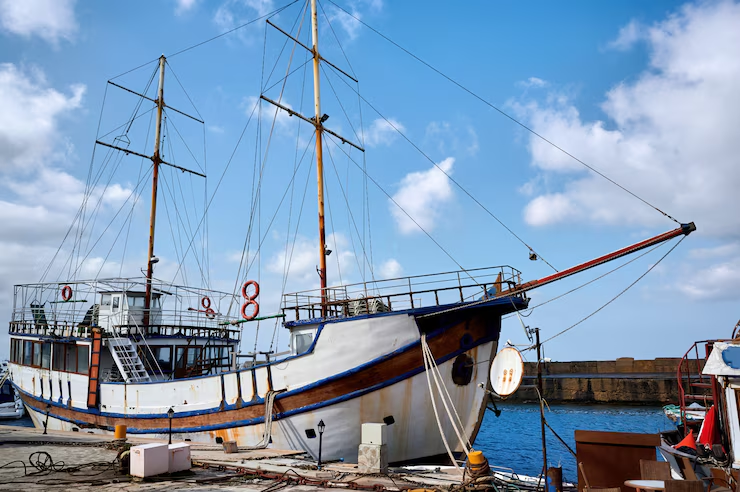
A lithium-ion battery fire investigation on a yacht should begin with evidence, not an assumption that the battery caused the fire. Investigators first determine where the fire began, identify possible ignition sources, document the battery and electrical systems, preserve surviving evidence, and test whether the proposed failure mechanism fits the physical, electronic, and documentary record.
This distinction matters because a lithium battery may be the source of a fire, may become involved after another electrical failure, or may simply be located within an area damaged by fire. Finding burned batteries alone does not establish origin or cause.
NFPA 921 provides a systematic framework for fire and explosion investigation that separates physical evidence, origin determination, cause determination, failure analysis, and marine fire investigation.
Why Lithium Ion Yacht Fires Require Specialized Investigation
Lithium-ion systems can behave differently from conventional lead-acid batteries during a casualty. A cell failure can enter thermal runaway, generating rapidly increasing heat and flammable gases. Heat from one affected cell can then involve neighboring cells and modules.
The U.S. Coast Guard identifies thermal runaway, flammable off-gases, toxic gas release, difficult suppression, and propagation between battery modules as significant marine lithium-ion hazards.
A possible failure sequence may look like this:
Initiating cell or electrical failure → thermal runaway → heat and gas release → propagation through the battery bank → surrounding materials become involved → major vessel fire
The investigation must still establish what initiated that chain.
What Is Thermal Runaway?
Thermal runaway occurs when a battery cell enters an uncontrolled self-heating condition.
Possible initiating conditions may include internal shorting, external shorting, overheating, physical damage, manufacturing defects, deep discharge, overcharging, or abnormal electrical conditions.
These are investigative hypotheses, not automatic conclusions.
The NTSB’s investigation of the yacht Flagship in Miami provides a useful example. Investigators concluded that thermal runaway and explosion occurred in the yacht’s 24-volt lithium-ion battery bank. The investigation linked the casualty to inoperable Battery Management Systems and manual charging practices that bypassed normal battery monitoring and protection.
How Does a Lithium-Ion Battery Fire Investigation Begin?
A marine fire investigation should establish the condition of the scene before extensive teardown, salvage, repair, or disposal changes the evidence.
Investigators may document the vessel layout, battery locations, chargers, wiring, electrical panels, fire damage, structural deformation, surviving electronic equipment, suppression activity, and areas of greatest thermal damage.
A&L’s broader marine accident investigation work includes fires, explosions, system failures, and other casualties where physical and technical evidence must be evaluated together. Marine Accident Investigation
Preserving the Fire Scene
Lithium battery fires can severely damage or destroy the suspected initiating component. Fire suppression, flooding, sinking, towing, salvage, weather exposure, and later repairs can change the scene further.
Where circumstances permit, investigators should document relevant systems before destructive examination and preserve components that may require later laboratory analysis.
Evidence preservation is especially important when insurers, manufacturers, yards, contractors, or other parties may need to participate in a joint examination.
Identifying the Area of Origin
The area of origin describes where the fire began. It is not the same as the cause.
Investigators may examine burn patterns, thermal damage, structural deformation, explosion effects, electrical components, battery remains, video evidence, witness observations, and system layout.
The most heavily damaged area can be important, but it should not be treated as automatic proof of origin.
In the Flagship investigation, security video showed an explosion emerging from the area containing the 24-volt battery bank. Investigators later found the most extensive structural and thermal damage around and above that battery location. Surviving battery system evidence provided additional corroboration.
How Do Investigators Determine Whether the Battery Started the Fire?
A defensible investigation asks whether several independent evidence sources support the same fire scenario.
For example:
CCTV may identify the location and time of the first visible explosion.
Physical damage may identify the area of greatest early fire involvement.
Battery remains may show which bank occupied that location.
BMS records may identify abnormal battery conditions.
Charging history may reveal how the system had been operated.
Maintenance records may show unresolved defects.
The conclusion becomes stronger when these separate sources agree.
The investigation should also test competing ignition sources, including shore power equipment, conventional wiring faults, chargers, inverters, electrical connections, machinery, fuel-related sources, and external ignition.
What Role Does the Battery Management System Play?
The Battery Management System, or BMS, is one of the most important entities in a yacht battery fire investigation.
A BMS can monitor cell voltage, current, temperature, state of charge, charging, discharging, and other battery conditions. Depending on the system, it may also control contactors or disconnect the battery when limits are exceeded.
Investigators should therefore ask:
Was the BMS functioning?
Were temperature and voltage sensors working?
Were alarms present?
Had protection functions been disabled?
Was the BMS bypassed?
Were settings appropriate?
Did surviving logs record abnormal conditions?
On the Flagship, the NTSB found that the BMS units were not operating as intended. A workaround allowed portable chargers to charge the battery banks while bypassing the normal BMS control. The batteries also experienced repeated deep discharge conditions.
That history became central to understanding the casualty.

How Charging Practices Can Contribute to Battery Failure
An investigator should not stop at the question, “Was the battery charging?”
The analysis may need to establish:
What charger was used?
Was it compatible with the battery system?
What voltage and current were supplied?
Was the BMS controlling the charge?
What was the battery’s condition before charging?
Had the bank experienced deep discharge?
Were charging events documented?
Had the system been modified?
Were portable or temporary chargers being used?
In the Flagship case, portable chargers and BMS bypass arrangements were important parts of the NTSB’s cause analysis.
Battery Failure or Electrical System Failure?
This distinction can significantly improve a marine battery fire investigation.
A fire may begin with an internal battery problem:
Internal cell failure → thermal runaway → fire
But another casualty may follow a different path:
Loose connection or charging fault → abnormal electrical condition → overheating or battery stress → thermal event
The USCG documented a 2025 casualty in which loosely crimped cable lugs overheated and caused a fire in an integrated lithium-ion battery installation aboard an inspected passenger vessel.
Investigators should therefore examine the complete installation, including battery cables, terminals, crimped connections, bus bars, circuit breakers, fuses, contactors, chargers, inverters, and shore power interfaces.
What Physical Evidence Is Examined?
Relevant evidence may include battery cells and modules, BMS components, contactors, chargers, cables, terminals, circuit protection, damaged electrical panels, structural materials, fire debris, and explosion damage.
Electrical examination may look for evidence of overheating, poor connections, arcing, shorting, damaged insulation, abnormal component installation, or modifications.
The purpose is not simply to identify damaged components.
Investigators must determine whether the damage existed before the fire, caused the fire, or occurred because the fire reached that component.
How Electronic Evidence Helps Reconstruct the Fire
Modern yachts can produce valuable digital evidence.
Investigators may review:
BMS logs
Battery voltage and temperature history
Charging records
Yacht monitoring systems
Alarm history
CCTV
Remote vessel monitoring
Shore power information
Event timestamps
The Flagship investigation illustrates the value of cross-checking digital and physical evidence. Security cameras captured the explosion, while surviving BMS data from other battery banks provided timing information close to the casualty. Investigators then compared that information with the location of physical damage and surviving battery system components.

Why Maintenance Records and Previous Problems Matter
A yacht battery fire may appear sudden even when warning signs existed earlier.
Investigators should review prior surveys, repair records, BMS faults, charging problems, electrician invoices, manufacturer correspondence, commissioning issues, modifications, and temporary workarounds.
The Flagship had documented battery management problems before the fire. A prior survey noted BMS issues, and the charging problems remained unresolved before personnel adopted temporary charging procedures.
This raises an important forensic question:
Was the casualty an unforeseeable failure, or did earlier technical evidence identify an unresolved condition?
Which Marine Standards May Be Relevant?
For U.S. recreational boats and yachts, several ABYC standards may become relevant depending on the vessel, installation, and date of construction or modification.
ABYC currently lists:
E 13, Lithium Ion Batteries
E 11, AC and DC Electrical Systems on Boats
A 31, Battery Chargers and Inverters
ABYC also periodically revises these standards, so investigators should confirm which edition and requirements apply to the specific vessel rather than assuming the newest standard governs an older installation.
NFPA 921 may also provide an important methodological reference for fire and explosion origin and cause investigation.
Standards should help frame the technical analysis. They should not be inserted merely to create a compliance violation.
What Happens When the Suspected Battery Is Destroyed?
A severe fire may leave little usable battery material.
That does not automatically make cause determination impossible.
Investigators may have to build the analysis from several independent lines of evidence:
| Evidence | What It May Help Establish |
|---|---|
| CCTV | Location and timing of first visible smoke, flame, or explosion |
| BMS data | Voltage, temperature, warnings, and battery condition |
| Charging records | When and how the battery was charged |
| Fire damage | Possible origin area and propagation |
| Electrical remains | Potential external faults or abnormal connections |
| Maintenance records | Previous defects and unresolved problems |
| Survey reports | Earlier documented deficiencies |
| Witness statements | Recent charging, repairs, alarms, or unusual behavior |
| Manufacturer information | Intended system configuration and operating limits |
The investigator should explain both what the evidence supports and what cannot be established because evidence was lost.
How Experts Rule Out Other Fire Causes
A strong fire origin and cause analysis tests alternatives rather than trying to confirm the first theory.
Possible competing causes may include conventional wiring failure, shore power problems, charger faults, inverter failure, electrical overheating, machinery fires, fuel-related ignition, and external fire exposure.
The process should follow:
Identify hypothesis → gather evidence → test against physical and electronic records → compare alternatives → accept or reject based on technical support
This approach helps prevent the mere presence of lithium-ion batteries from becoming the conclusion.
How Findings Support Insurance and Maritime Litigation
A yacht fire can involve the owner, insurer, manufacturer, yacht builder, system integrator, shipyard, electrician, charger manufacturer, maintenance contractor, or other parties.
The technical investigator should not decide legal liability.
The investigator can instead address questions such as where the fire began, what ignition mechanism is supported, whether the battery system operated as designed, whether modifications affected protective systems, whether prior defects existed, and whether the physical evidence supports a particular failure scenario.
That technical separation is especially important in cause of loss, recovery, and subrogation matters.
For matters involving disputed technical evidence, A&L’s marine legal experts provide investigation and litigation support grounded in vessel systems and physical evidence. Marine Legal Experts
What Should a Marine Fire Investigation Report Include?
A useful report should document the incident background, scene condition, evidence preserved, vessel electrical layout, battery system configuration, BMS condition, charging arrangement, fire origin analysis, physical evidence, electronic records, maintenance history, relevant standards, alternative ignition sources, failure sequence, technical conclusions, and limitations.
The report should clearly separate observed facts from technical interpretation.
Build the Conclusion From the Evidence
A reliable lithium-ion battery fire investigation does not begin with “the battery caused the fire.”
It begins with:
Where did the event originate? What systems were present? What evidence survived? What happened before the fire? Which failure mechanisms fit the evidence? Which alternatives can be excluded?
A&L Maritime Experts combines marine accident investigation, vessel inspection, forensic engineering, thermal imaging, and maritime litigation support to evaluate complex yacht fires and electrical system failures. If a yacht fire involves disputed battery causation, charging problems, electrical modifications, insurance issues, or litigation, contact A&L Maritime Experts for an independent technical review. Contact A&L Maritime Experts