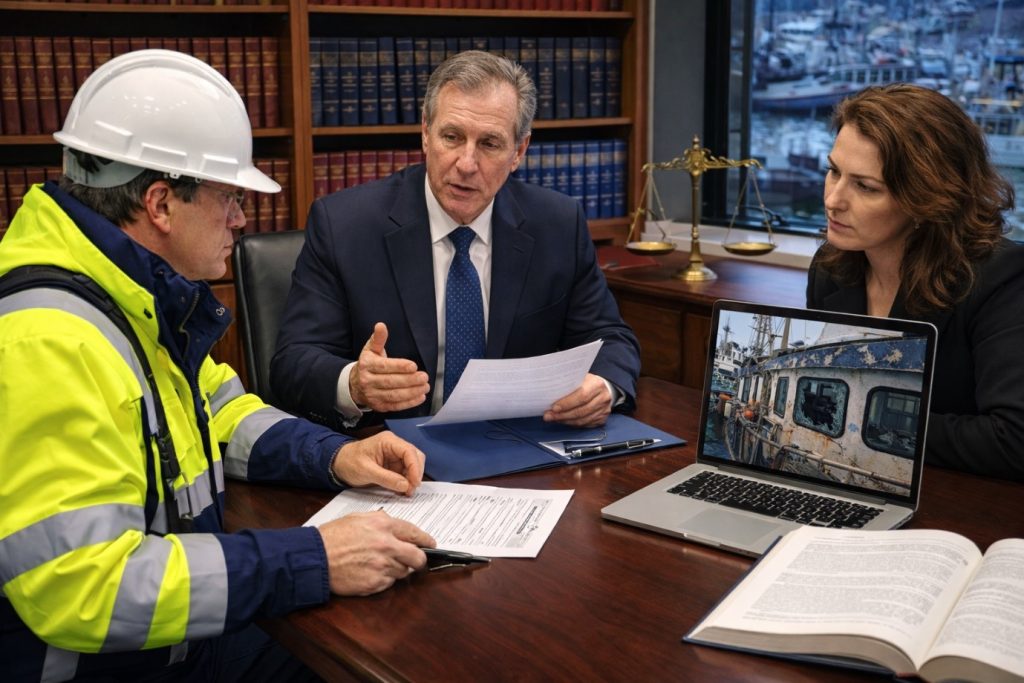
The sinking of the Titanic remains a seminal illustration of how collective complacency and hierarchical consensus can override common sense. Despite multiple iceberg warnings, excessive speed, and insufficient lifeboats, Captain Edward Smith and White Star Line officials persisted in decisions shaped by an unspoken consensus: the ship was “unsinkable.” Rather than openly debating alternatives, the crew and executives suppressed dissent. This mindset echoes classic groupthink dynamics, where critical voices are silenced in favor of cohesion.
In the maritime sphere, groupthink may manifest when vessel officers, managers, or investigators avoid challenging prevailing narratives — especially when commercial pressure or reputational risk is high. That unwillingness to confront assumptions is arguably what “sank the Titanic” more than any iceberg did.
Groupthink in Modern Boat & Yacht Operations
While no single commercial small vessel under 200 ft faces the scale of the Titanic, the same psychological forces can play out on smaller craft — charter boats, workboats, yachts, or fishing vessels. In practice:
- A captain or operator may discount minor structural warnings to preserve schedule or image.
- An engineering officer might suppress concerns over fuel systems to avoid conflict with owners.
- In internal investigations following a boating collision, team members may default to confirming the narrative proposed by senior leadership rather than exploring alternative hypotheses.
Such consensus-seeking can undermine safety, lead to misdiagnosis of root cause, and perpetuate erroneous practices across fleets.
Investigation Risk: When Groupthink Survives Incident Review
Even post-incident, groupthink can skew investigations. Investigators (internal or external) may coalesce around an early hypothesis, ignore contradictory data, or avoid challenging influential parties. This results in erroneous conclusions, legal exposure, or repeated incidents.
In contrast, a truly independent investigation resists momentum from dominant voices, demands rigorous cross-checks, and gives equal weight to outlier evidence.
Lateral Thinking as a Safeguard
Lateral thinking — the disciplined pursuit of non-obvious solutions — offers a bulwark against groupthink. In maritime operations and investigations, lateral thinking means:
- Encouraging “devil’s advocate” roles in decision teams to intentionally challenge assumptions.
- Structuring “pre-mortem” thinking: ask, “How might this decision fail?” before implementation.
- Incorporating independent technical voices early, not just after catastrophe.
- Ensuring investigations begin with facts rather than being framed around accepted narratives.
Applied at the level of small commercial boats and yachts (20–250 ft), such practices foster operational resilience and more credible conclusions.
The A&L Difference: “No Theories. Just Facts.”
At A&L Maritime Experts, LLC, our guiding philosophy rejects conjecture. From marine surveying to accident investigation and expert testimony, we ground every case in verifiable data. When groupthink threatens to compromise insights, we implement structural safeguards, including independent audits, cross-disciplinary reviews, and rigorous documentation of dissenting views.
Whether probing a yacht collision, a fishing boat sinking, or the damage to a workboat, our commitment remains the same: eliminate theory drift, surface all possibilities, and let facts — not consensus — drive conclusions.
Guarding Against Groupthink in Practice
- In onboard operations, establish protocols that allow any crew member to pause execution pending review.
- In fleet management, rotate review teams to avoid echo chambers.
- In post-incident inquiry, demand root-cause trees that reflect multiple hypotheses.
By institutionalizing challenges to consensus and privileging data over deference, commercial boat and yacht operators reduce the chances of tragedy — from near-misses to full loss.
Groupthink may have played a central role in the Titanic disaster, but that lesson is not confined to history. In today’s boating and yachting environment, particularly with vessels in the 20–250 ft class, lateral thinking and fact-based investigation are essential safeguards. At A&L Maritime Experts, LLC, we remain vigilant against consensus bias and resolutely committed to “No theories. Just facts.” In a field where lives, assets, and legal outcomes hinge on accuracy, that difference matters profoundly.
At A&L Maritime Experts, LLC, we provide litigation-grade marine surveying, accident investigation, and expert witness services. Every case rests on practical experience — over 16,000 vessel inspections and five decades of engineering insight. Our findings stand up under the toughest cross-examination, whether you need a boat crash expert or assistance with boating crash investigation in Florida. We also deliver trusted support in yacht collision investigation, vessel accident witness testimony, and boat accident analysis. For fact-driven maritime legal support or expert shipwreck investigation, partner with us today. Call now to speak directly with our specialists.