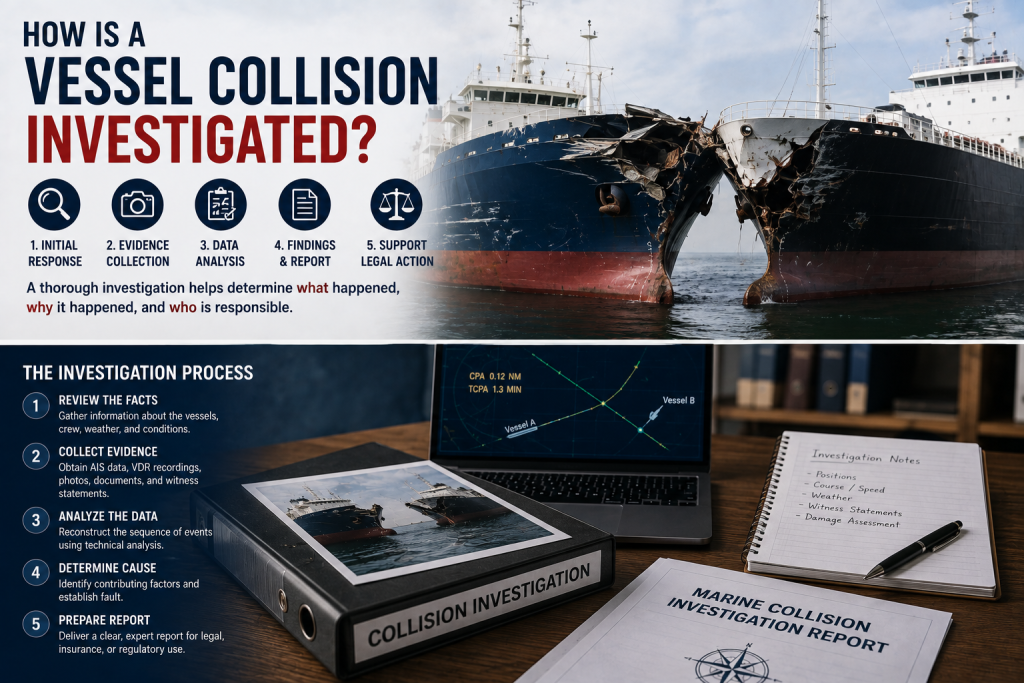
In maritime investigations, terminology matters because legal outcomes often hinge on precise definitions. A collision refers to an incident where two moving vessels strike each other, while an allision occurs when a moving vessel impacts a stationary object, such as a dock, buoy, or anchored ship. This distinction may seem minor, but it directly affects fault determination, liability assessments, and insurance coverage.
This is why specialists skilled in boating crash investigation in Florida cases place great emphasis on defining the event correctly from the outset. Proper classification sets the foundation for every subsequent step, from evidence gathering to legal arguments.
Technical Evidence Collection
The investigative process for collisions and allisions often starts with site surveys, damage assessment, and reconstruction of vessel movements. High-resolution photography, AIS data, and witness statements help create a precise timeline of events. Surveyors also examine paint transfers, hull indentations, and scrape patterns to determine the angle and force of impact.
In the case of allisions, investigators often inspect stationary structures to evaluate the extent of damage and confirm whether proper lighting, signaling, or placement contributed to the incident. For collisions, analysts look closely at speed, right-of-way, and visibility conditions to establish whether navigational rules were followed. The goal is to provide a clear picture that removes ambiguity and supports legal defensibility.
Legal Implications
The legal distinctions between collisions and allisions extend beyond vocabulary—they shape the allocation of fault and damages. In allision cases, there is often a presumption of fault against the moving vessel, but this can be rebutted with strong technical evidence showing mechanical failure, environmental conditions, or obstruction issues. Collisions, meanwhile, are frequently adjudicated under the “comparative fault” principle, requiring a detailed analysis of each vessel’s conduct.
An experienced vessel accident witness can provide testimony that clarifies human factors, bridge team actions, and compliance with COLREGs (International Regulations for Preventing Collisions at Sea). Their input can strengthen the evidentiary chain and improve the likelihood of a favorable outcome.
Human Factors and Operational Context
Beyond technical damage analysis, investigators also review crew readiness, fatigue levels, and training records. Fatigue-related errors can contribute to late course corrections, delayed braking, or failure to sound warnings. By including operational and human performance data, forensic reports create a comprehensive record that attorneys can present confidently in arbitration or litigation.
Strengthen Your Case with Expert Support
For those facing disputes involving collisions or allisions, expert assistance can help transform technical data into a defensible case. With services that integrate maritime legal support in Florida, professional reporting, and reliable testimony, A&L Maritime Experts, LLC ensures operators and attorneys have the insight needed to pursue fair outcomes and protect financial interests.
Contact us today.